
About Ayyappa Teertha Kshetram – Hasmathpet
Some temples begin with a building.
Our journey began with seva.
Ayyappa Teertha Kshetram grew from years of devotion, service to Ayyappa devotees and a commitment to preserving the discipline and traditions connected with Bhagwan Ayyappa.
Long before the present stone temple took shape, devotees were already gathering, worship was already continuing, Shasta Preethi was already being served, and the path of Ayyappa was already being lived.
The Kshetram therefore did not begin as a project to create a structure.
It grew around a responsibility:
to continue the seva of Bhagwan Ayyappa with sincerity, discipline and care.
The Sacred Stone Vigraham
The vigraham worshipped at Ayyappa Teertha Kshetram – (Hasmathpet) is a stone vigraham of Bhagwan Ayyappa.
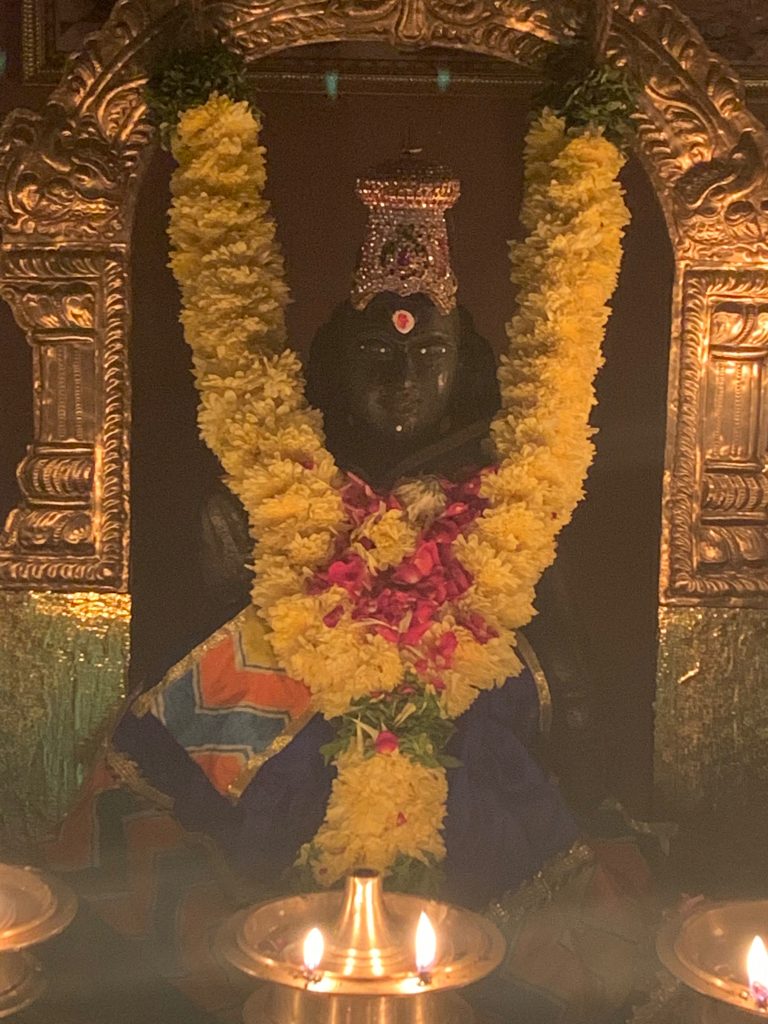
Unlike the Panchaloha vigrahams commonly seen in many Ayyappa temples, this vigraham carries a much older history.
It is believed to be more than a century old and was assessed as such by a former Melshanti of Sabarimala.
For many years, the vigraham had been worshipped in the home of an elderly Guru Swamy who had served Bhagwan Ayyappa with devotion.
As age advanced, he began speaking repeatedly of dreams in which Bhagwan Ayyappa indicated that He would soon leave that household.
The family became concerned about the continuation of daily worship and seva in the years ahead.
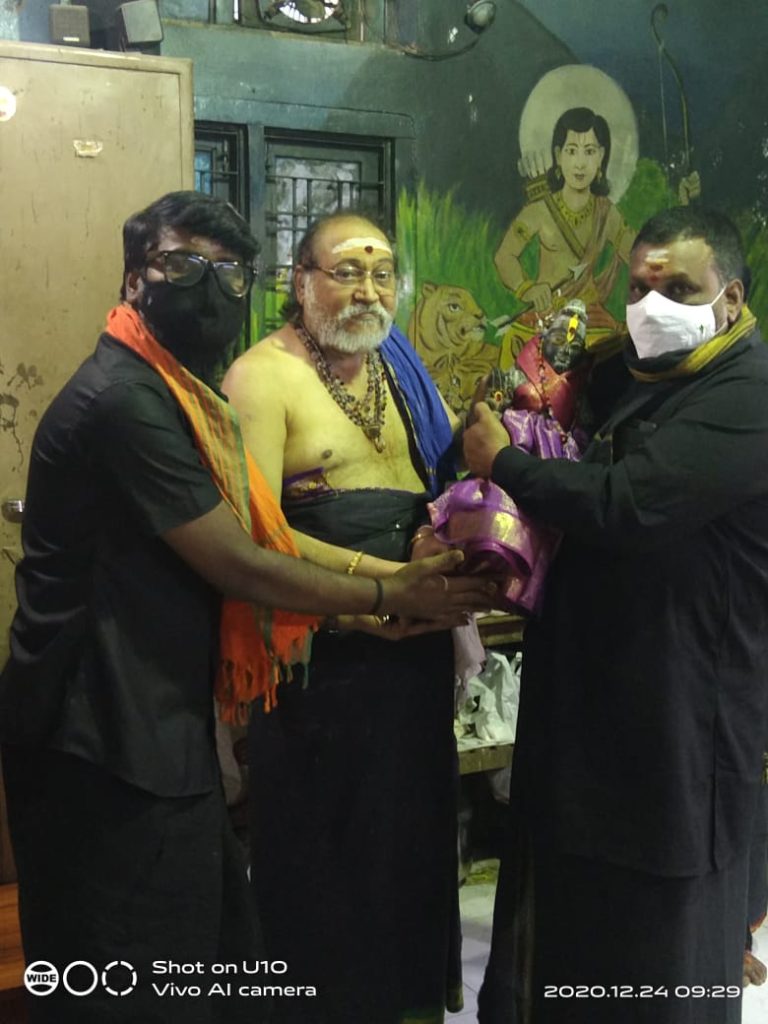
Through Nayini Buchi Reddy Ji, National General Secretary of Sabarimala Ayyappa Seva Samajam (SASS), the vigraham was eventually entrusted to Kapil Barabari Guru Swamy on 24 December 2020.
That day became a defining moment in the history of the Kshetram.
**The responsibility was not merely to receive a Vigraham.
It was to continue the seva.**
The Early Shrine — Seva Before Structure
After the sacred vigraham of Bhagwan Ayyappa was entrusted to the Kshetram, worship continued in a small and simple space.
There was no large temple complex.
There was no grand structure.
There was only the responsibility to continue the seva with sincerity.
Step by step, devotees began to gather around the worship of Bhagwan Ayyappa.
The space remained simple, but the devotion around it continued to grow.
What mattered most was not the size of the shrine.
It was that the pooja continued.
It was that devotees had a place to come.
It was that seva remained uninterrupted.
The Kshetram grew first through devotion, and only later through stone.
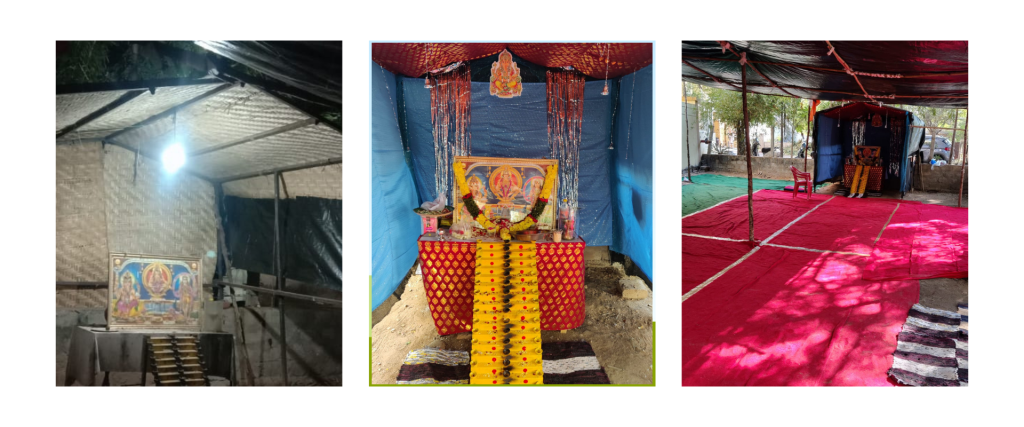
After the sacred vigraham of Bhagwan Ayyappa was entrusted to the Kshetram, worship continued in a small and simple space.
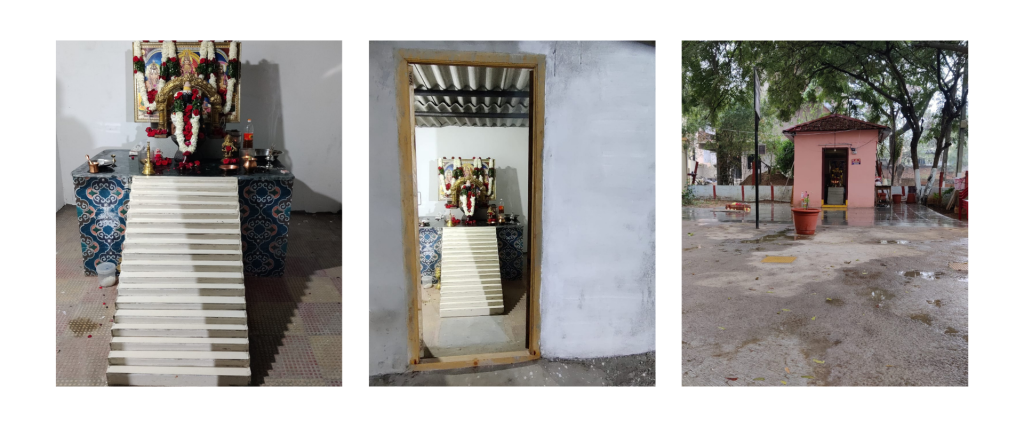
There was no large temple complex.
There was no grand structure.
There was only the responsibility to continue the seva with sincerity.
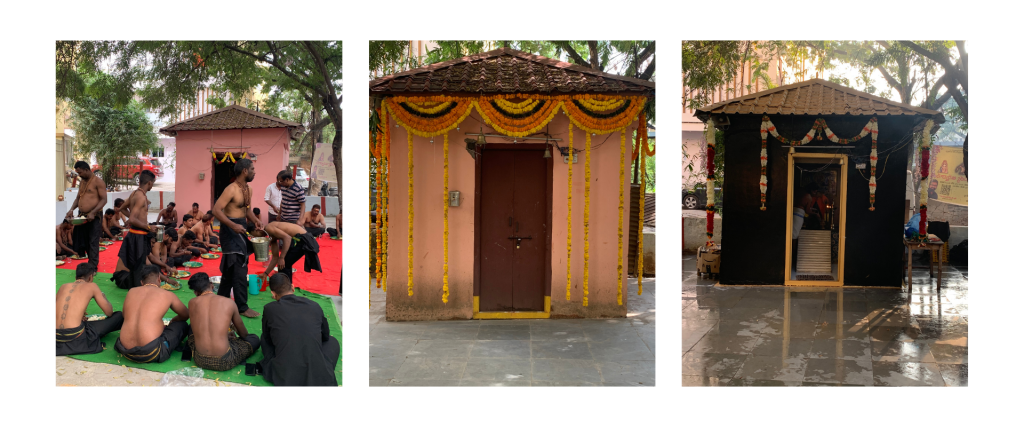
Step by step, devotees began to gather around the worship of Bhagwan Ayyappa.
The space remained simple, but the devotion around it continued to grow.
What mattered most was not the size of the shrine.
It was that the pooja continued.
It was that devotees had a place to come.
It was that seva remained uninterrupted.
The Kshetram grew first through devotion, and only later through stone.
Shasta Preethi — Anna Seva During Mandala Kalam
One of the most important forms of seva at the Kshetram is Shasta Preethi — Anna Prasadam offered to Ayyappa devotees during the Mandala season.
This seva has been continuing from the years before the present temple structure was built.
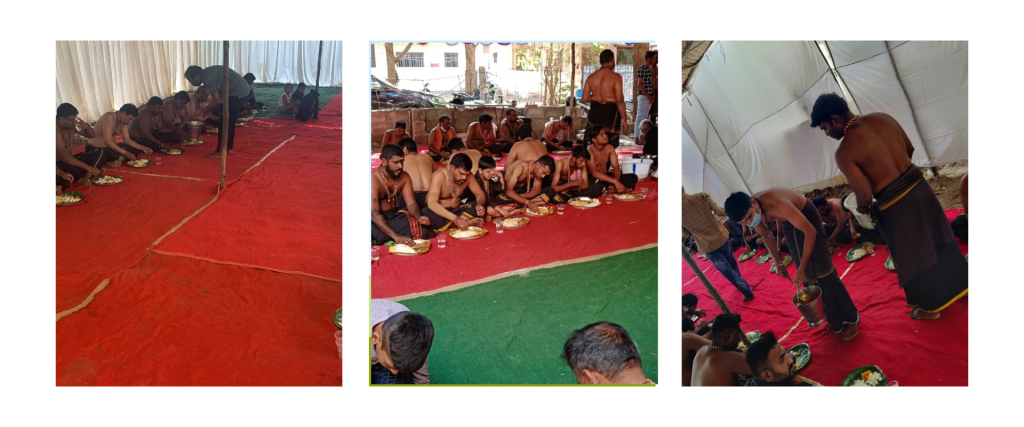
During the 41 days of Mandala Kalam, approximately 200 to 300 devotees come each day to receive Anna Prasadam in the afternoon.
Some come wearing the Mala.
Some are preparing for Yatra.
Some are returning from Sabarimala.
Some simply come with devotion.
But when they sit for Anna Prasadam, distinctions begin to disappear.
**Seva is not measured by the size of the temple.
It is measured by how many hearts are welcomed within it.**
Annual Ayyappa Procession
As the community around the Kshetram grew, another tradition began to take shape.
From 2021 onwards, an annual procession of Bhagwan Ayyappa began in the local area, marking the continuing presence of the Kshetram and bringing devotees together in collective celebration and bhakti.
Year after year, participation increased.
Men, women, children and elderly devotees joined the procession with devotion and enthusiasm.
What began on a smaller scale gradually became a larger community expression of faith.
In 2021 and 2022, an elephant from Karnataka also participated in the procession, making those early years especially memorable for the devotees who were present.
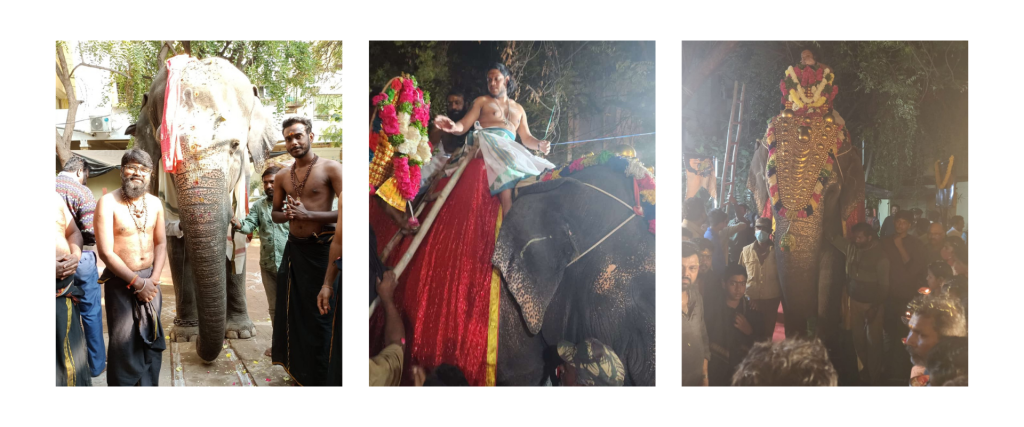
From there, the procession continued to grow with increasing participation from the local community.
The procession became more than an annual event. It became a way for the Kshetram and the devotees around it to walk together in the name of Bhagwan Ayyappa.
From a Small Shrine to a Stone Temple
As the years passed and the number of devotees continued to grow, the need for a permanent temple became increasingly clear.
The decision was made that the Kshetram should not simply be expanded as an ordinary concrete structure.
The temple would be built in stone, reflecting the sacred character of the space and the long-term responsibility of preserving the worship of Bhagwan Ayyappa.
On 4 April 2025, the Bhoomi Pooja for the new temple was performed.
What followed was not merely construction.
It was the beginning of transforming years of seva into a permanent sacred space.
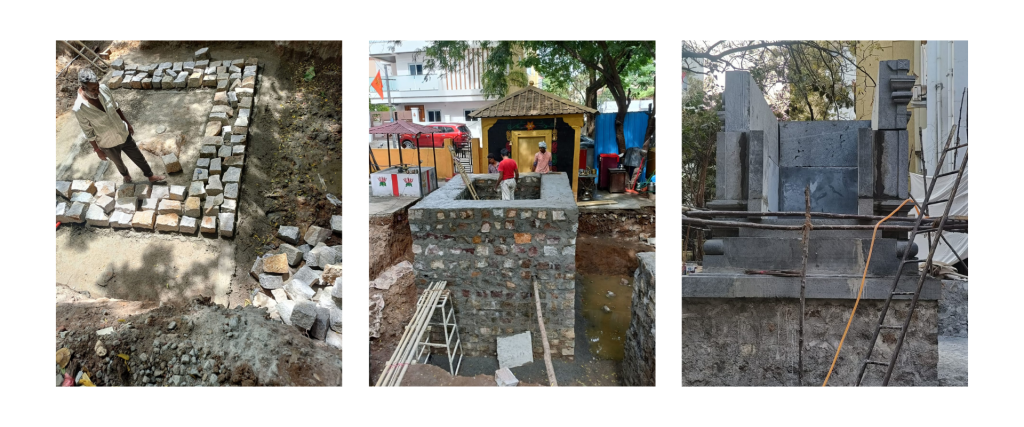
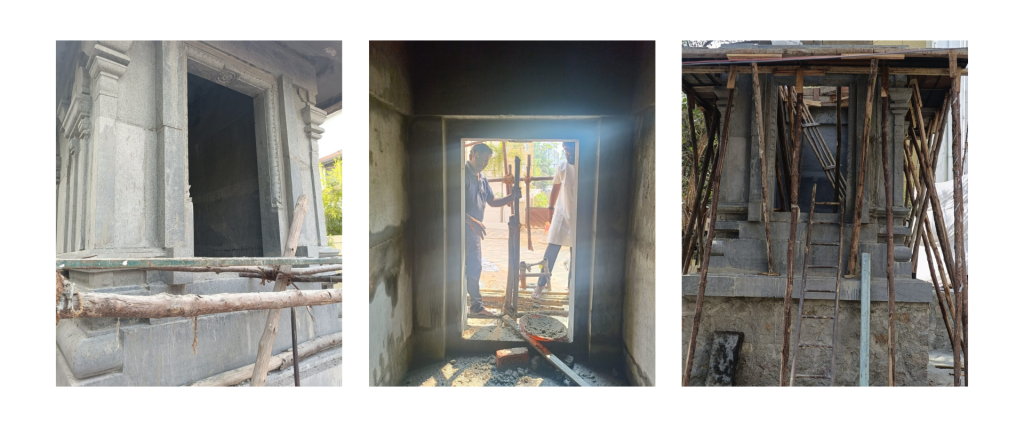
The temple slowly took shape through stone, ritual preparation and the collective efforts of those who supported the Kshetram.
A Divine Sign During the Foundation
When the foundation for the temple was being dug, a large stone was found nearly ten feet below the earth, at the exact place where Bhagwan Ayyappa was later to be seated.
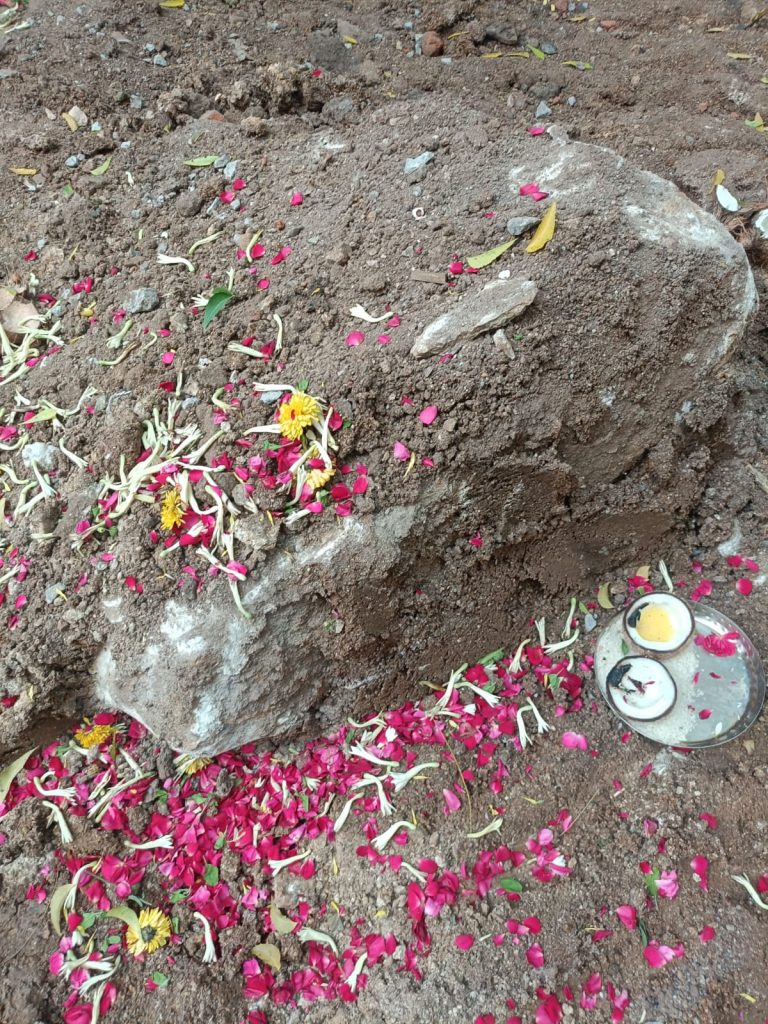
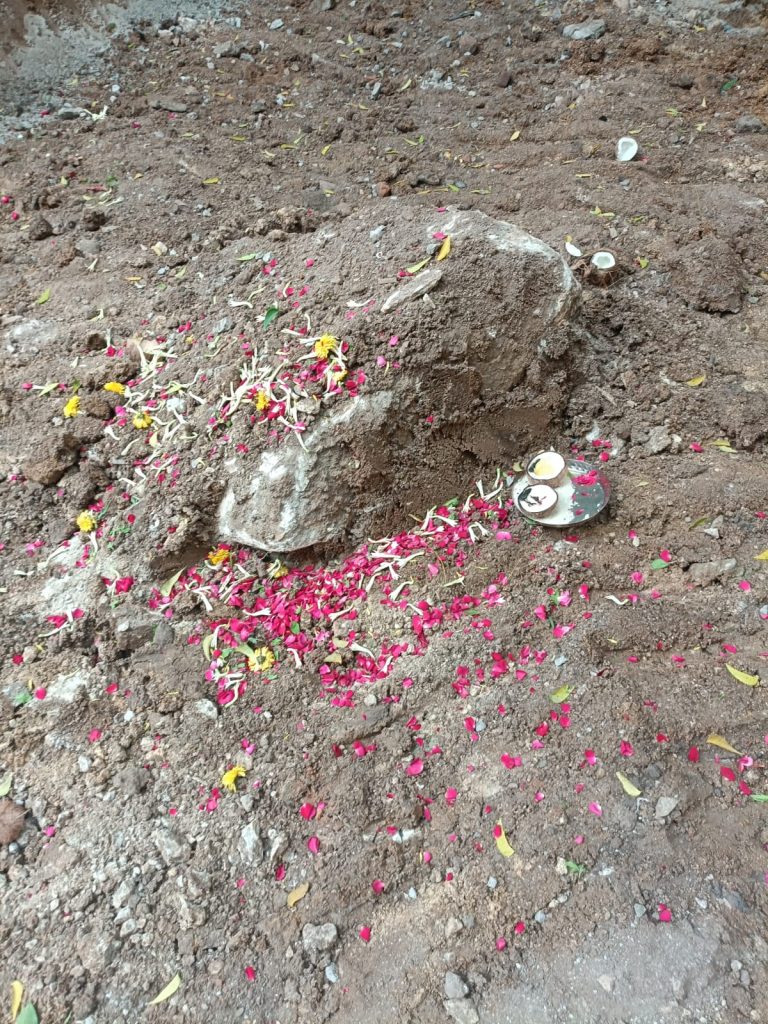
To us, this was a sacred and unforgettable moment. Devotees received it as a divine sign, as though Bhagwan Ayyappa Himself had marked the place where He wished to reside.
The presence of that stone reminded us of the sacred association of Ayyappa with the stone seat of Sabarimala, and it gave even greater meaning to the construction of the temple.
From that very point, the procedures connected to Shadadhara Sthapana were undertaken, and the sacred foundation elements — including pure copper placement in accordance with temple tradition — were established before the consecration.
Shadadhara Sthapana — Preparing the Sacred Foundation
Before Bhagwan Ayyappa was finally installed and consecrated in the temple, an important traditional stage of the sacred foundation was undertaken — Shadadhara Sthapana.
This is not a regular or daily temple pooja.
It forms part of the deeper preparatory process through which the sacred seat of the deity is established before the final Pratishtha.
At our Kshetram, the Shadadhara preparations were carried out from the very place where the stone had been discovered during excavation.
The required sacred elements were placed in accordance with the temple tradition, along with the use of pure copper as part of the consecration foundation.
For us, this stage represented something very important:
Before Bhagwan Ayyappa was installed above, the sacred foundation below was first prepared with devotion and care.
Among the Ayyappa temples and institutions known to us through years of association in Telangana, we have rarely seen this process undertaken in this manner.
For that reason, the Shadadhara Sthapana remains one of the most significant moments in the consecration history of our Kshetram.
Pratishtha — 20 March 2026
After years of seva, Mandala Anna Prasadam, annual processions, temple construction, the discovery of the sacred stone beneath the future seat of Bhagwan Ayyappa, and the completion of Shadadhara Sthapana, the Kshetram reached a defining moment.
On 20 March 2026, the sacred Pratishtha of Bhagwan Ayyappa was performed in the newly constructed stone temple.
For everyone connected with the Kshetram, this was not simply the completion of a building.
It was the culmination of a journey that had begun years earlier through seva, responsibility and devotion.
The same Bhagwan Ayyappa whose vigraham had once been worshipped in a small and simple space was now established in a permanent stone temple prepared through traditional ritual processes.
**The structure had changed.
The purpose had not.**
The Kshetram continued to stand for the same values with which the journey began:
Seva.
Discipline.
Devotion.
Guidance.
Community.
What the Kshetram Stands For Today
Ayyappa Teertha Kshetram – (Hasmathpet) continues with one clear purpose — to serve Bhagwan Ayyappa and support devotees who walk His path.
The Kshetram exists to preserve and share the traditions connected with:
Vratham and Deeksha
Irumudi and Yatra preparation
Sharana Ghosha and devotional practice
Anna Seva and Shasta Preethi
Temple traditions and sacred observances
Guidance for first-time and experienced devotees
Community participation and service
We believe that devotion becomes stronger when it is supported by understanding, discipline and sincere practice.
**The Kshetram was not built first and then given a purpose.
The seva came first, and the temple grew around it.**
Swamy Sharanam Ayyappa.